Case Study: Air Canada
Advancing design maturity across practice and strategy
Overview
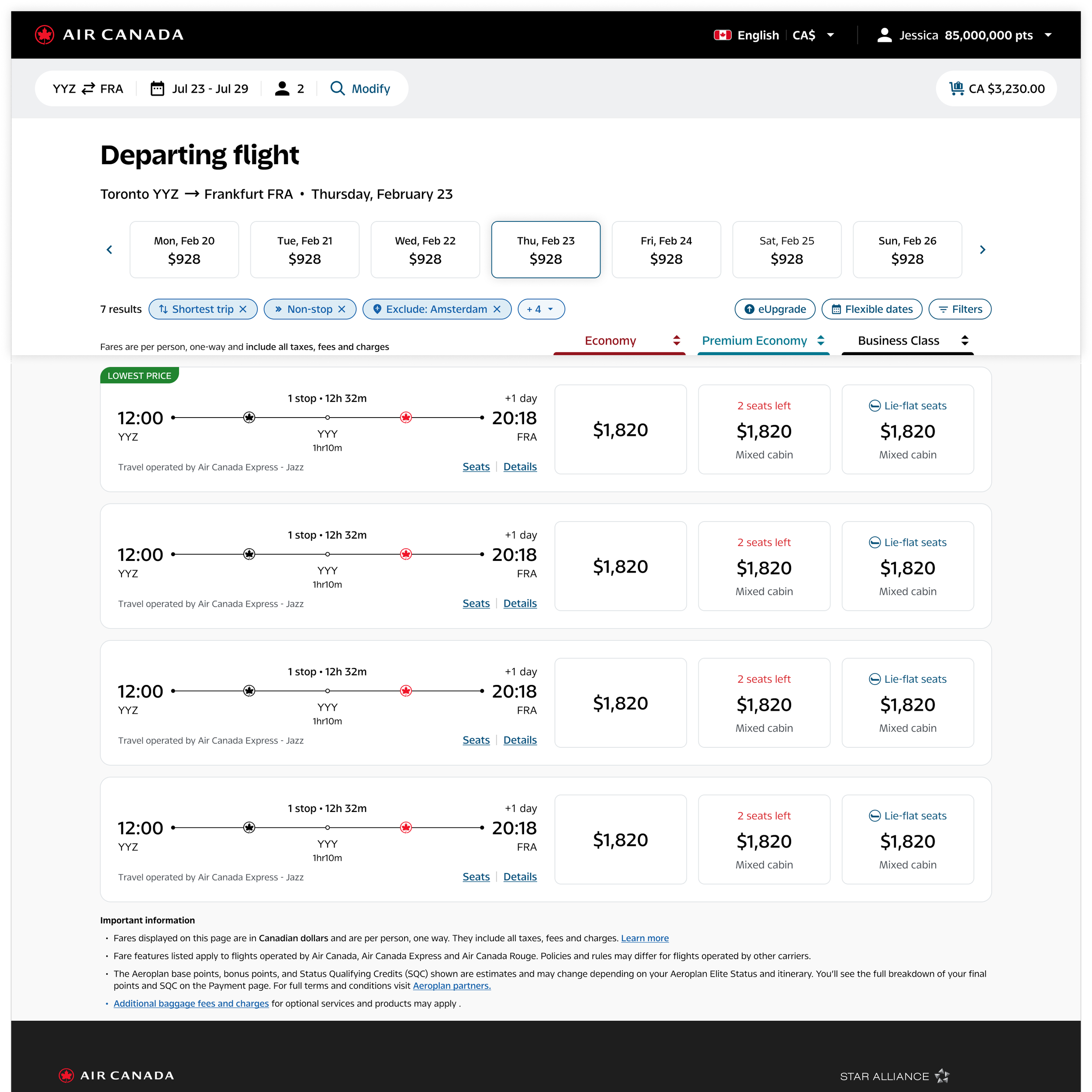
Air Canada engaged IBM iX to elevate their design practice maturity while delivering critical product improvements across their customer booking experience. Joining the project as a design lead and coach, I established the foundational DesignOps infrastructure needed to scale their team's capabilities, which included research repositories, design request workflows, and structured mentorship programs. Simultaneously, I led the implementation of their Compass Design System across Book, Shop, and Manage experiences, redesigning core user journeys and launching self-service features like rebooking and reaccommodation. The engagement strengthened both the design team's operational effectiveness and the product's user experience.
Business Objectives
Elevate Product Design Leadership: Lead end-to-end experience design for critical Air Canada web platform features while establishing design standards that balance user needs with business goals and technical constraints.
Advance Design Practice Maturity: Developed and implemented a structured coaching framework to accelerate designer capability, foster professional growth, and embed strategic design thinking across Air Canada's product teams.
Result
Coached 12 designers through structured bi-weekly sessions, advancing team capability across UX fundamentals and emerging skill areas.
Built DesignOps infrastructure spanning design request systems, research repositories, maturity assessments, and knowledge-sharing forums, reducing silos and accelerating delivery.
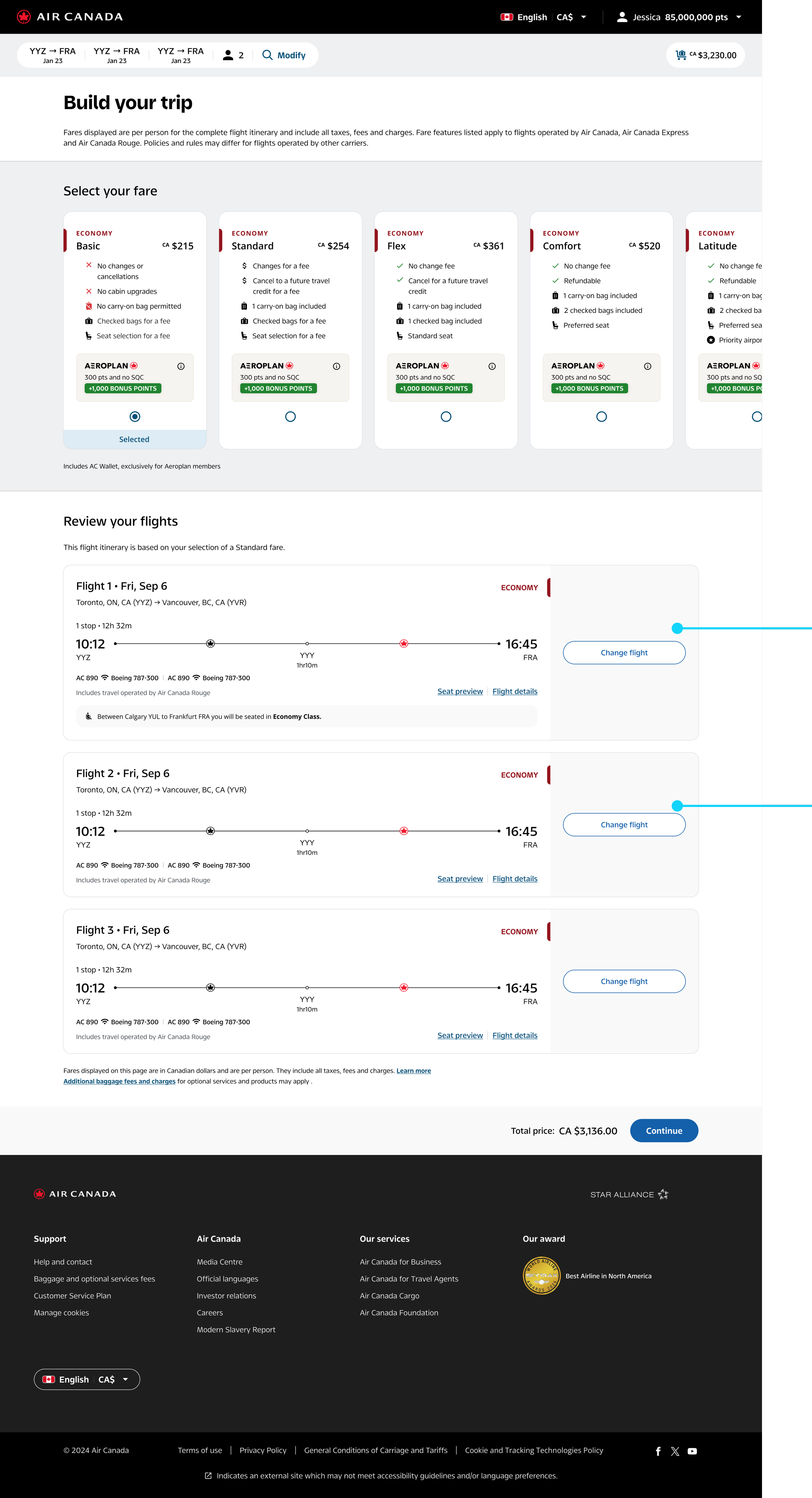
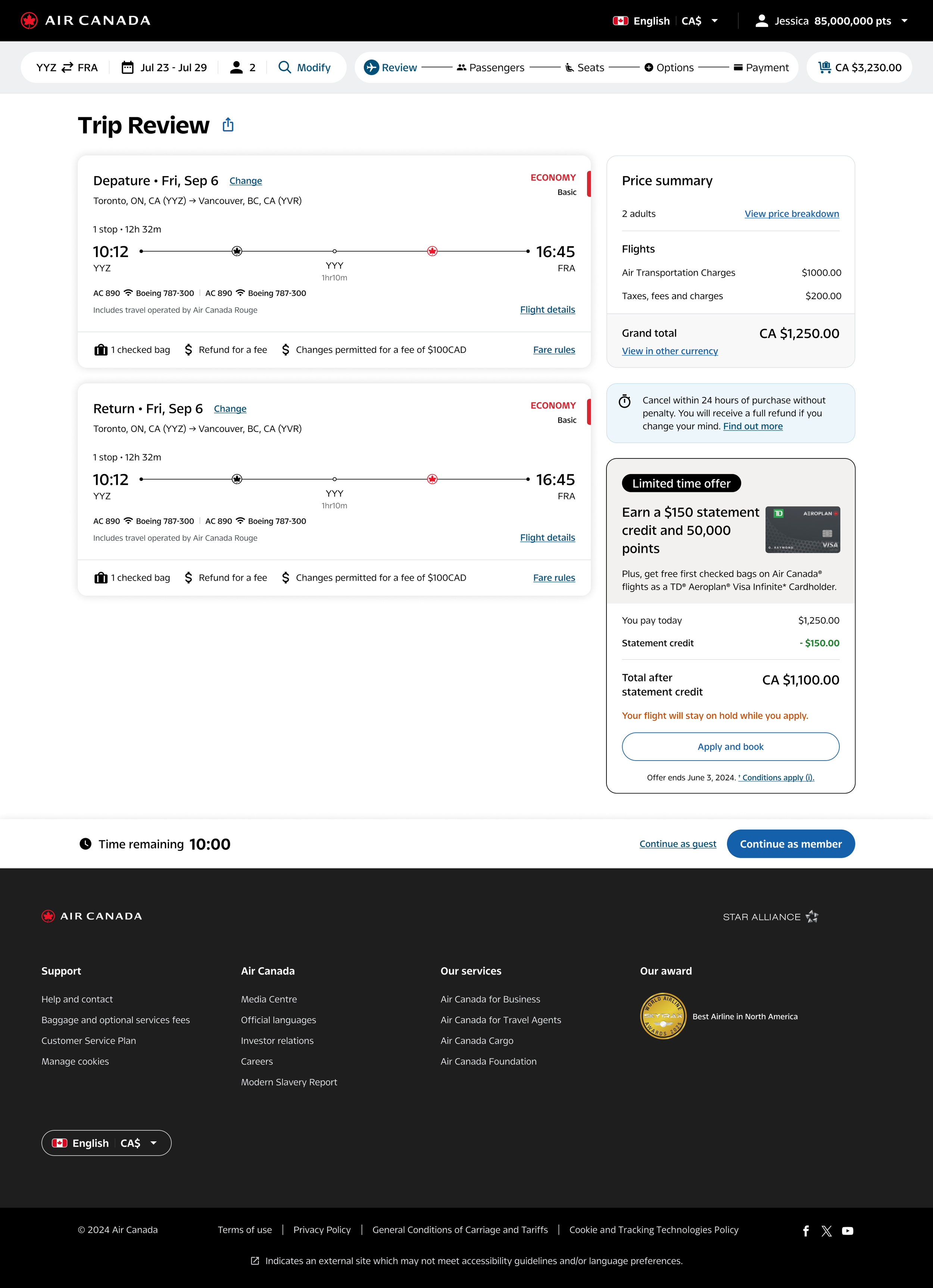
Drove product outcomes via Compass Design System implementation across Book, Shop, and Manage, including self-service rebooking and reaccommodation features.
Developed AI-driven design workflows to increase productivity and streamline stakeholder collaboration.
Tools
Figma, Figma Make, Claude, Mural
Role
As the design lead and coach, I was responsible for establishing the DesignOps framework, leading product design initiatives across the booking experience, facilitating design practice maturity assessments, and mentoring the Air Canada design team to elevate their practice maturity. I managed design delivery for the Compass Design System implementation while conducting bi-weekly coaching sessions to build sustainable capabilities within the client's team.
When I joined, the booking experience was built on a foundation that couldn't scale.
Air Canada's web booking flow had grown complex over time — and the design reflected it. Legacy components were inconsistently applied across the Book, Shop, and Manage experiences, and the Compass Design System had seen little adoption in production. My first step was an end-to-end audit: evaluating every screen against system standards, business intent, and real user behaviour at each stage of the journey.
What surfaced quickly was a structural problem. Content-heavy interactions — fare rules, flight details, filter panels — had been solved with modals. Small ones, that forced users to scroll through critical information in a cramped container. On tablet and mobile, these broke down entirely. The team had patched individual screens without a shared pattern, which meant the problem compounded across the experience.
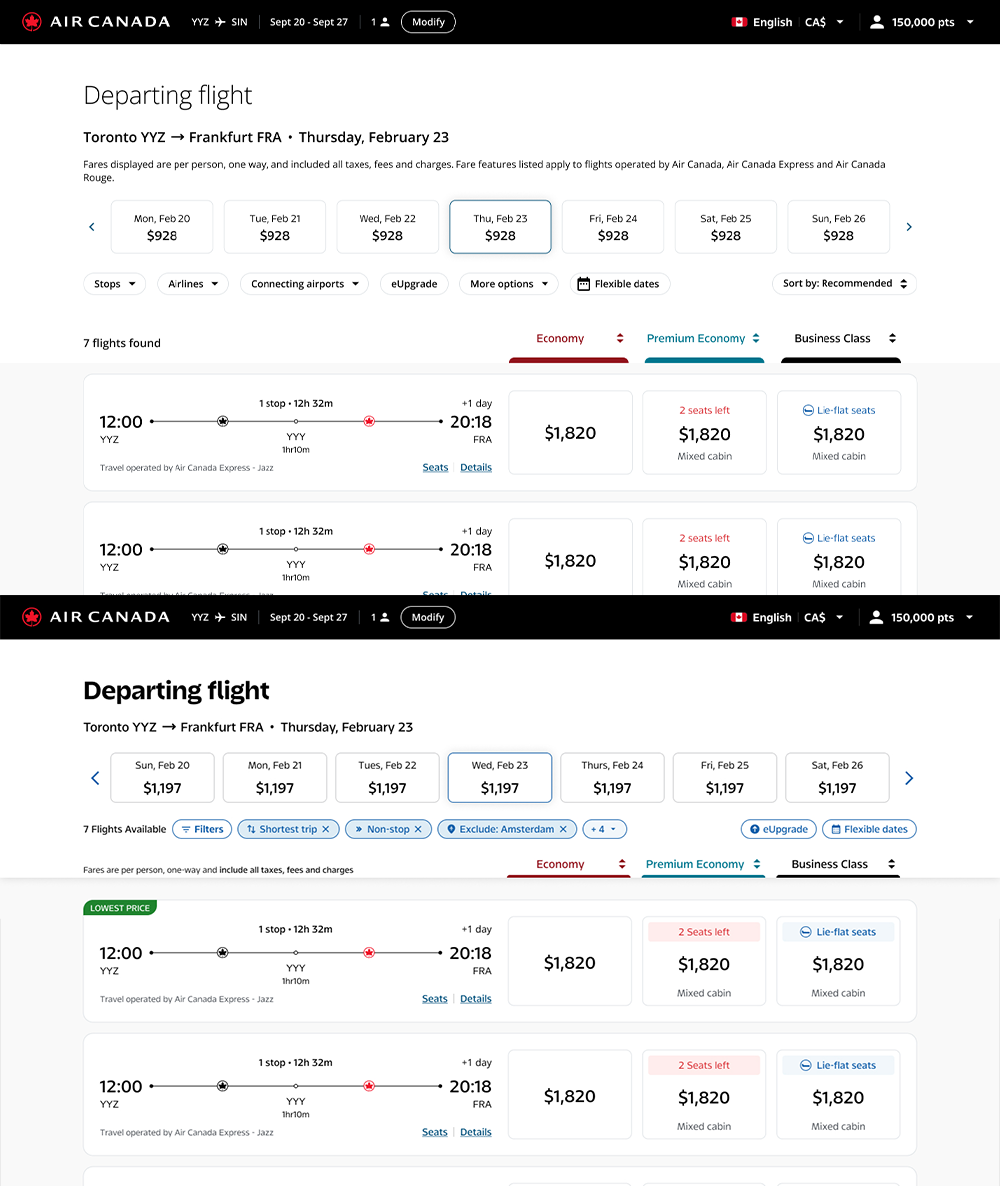
The flight results page before Compass implementation. Existing filter and detail patterns relied on constrained modals that didn't hold up across breakpoints.
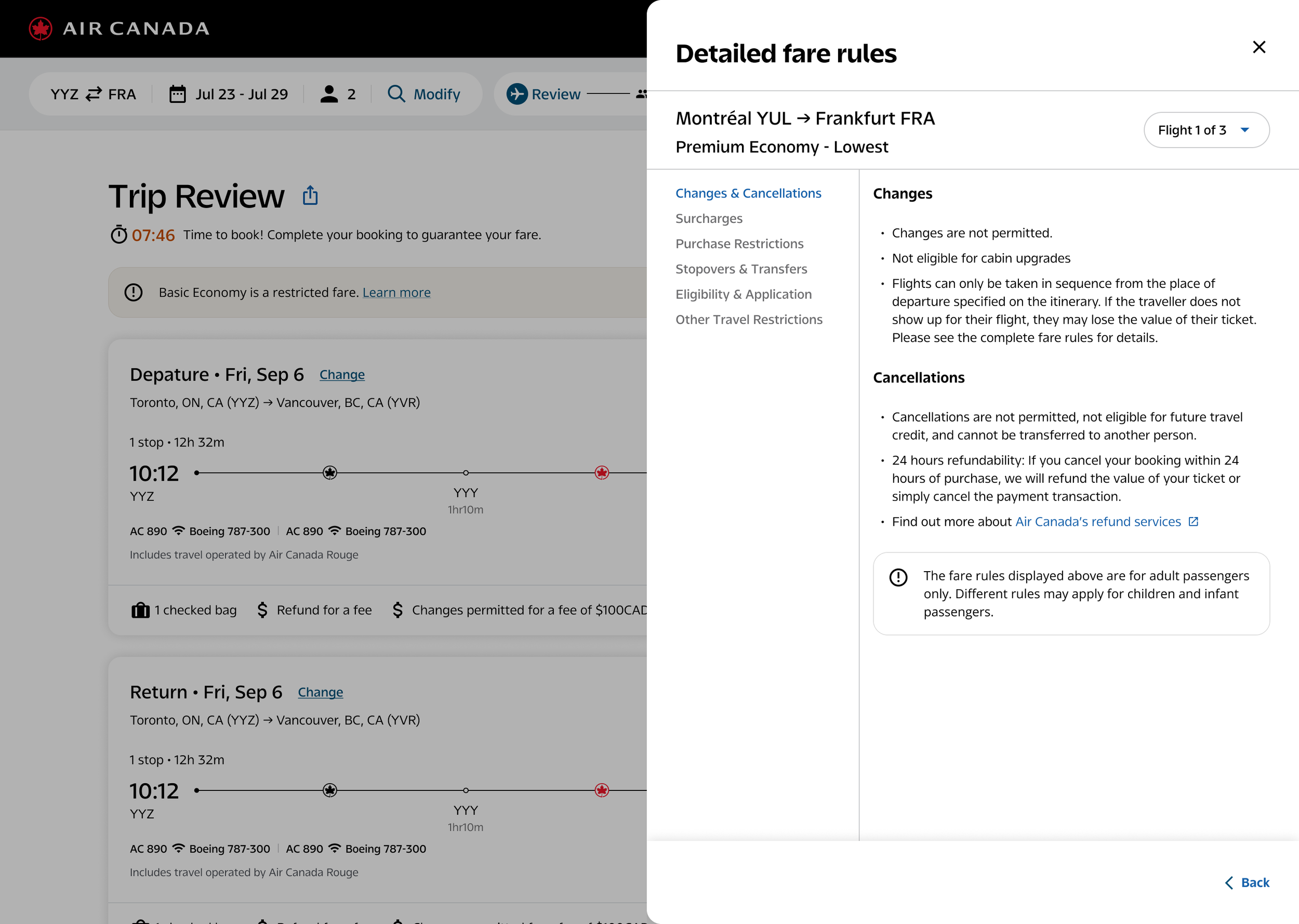
To address this systematically, I designed a drawer component family as a scalable alternative for displaying content-heavy information. Drawers used the full viewport height, adapted cleanly across desktop, tablet, and mobile, and gave the team a consistent interaction pattern to apply across multiple surfaces.
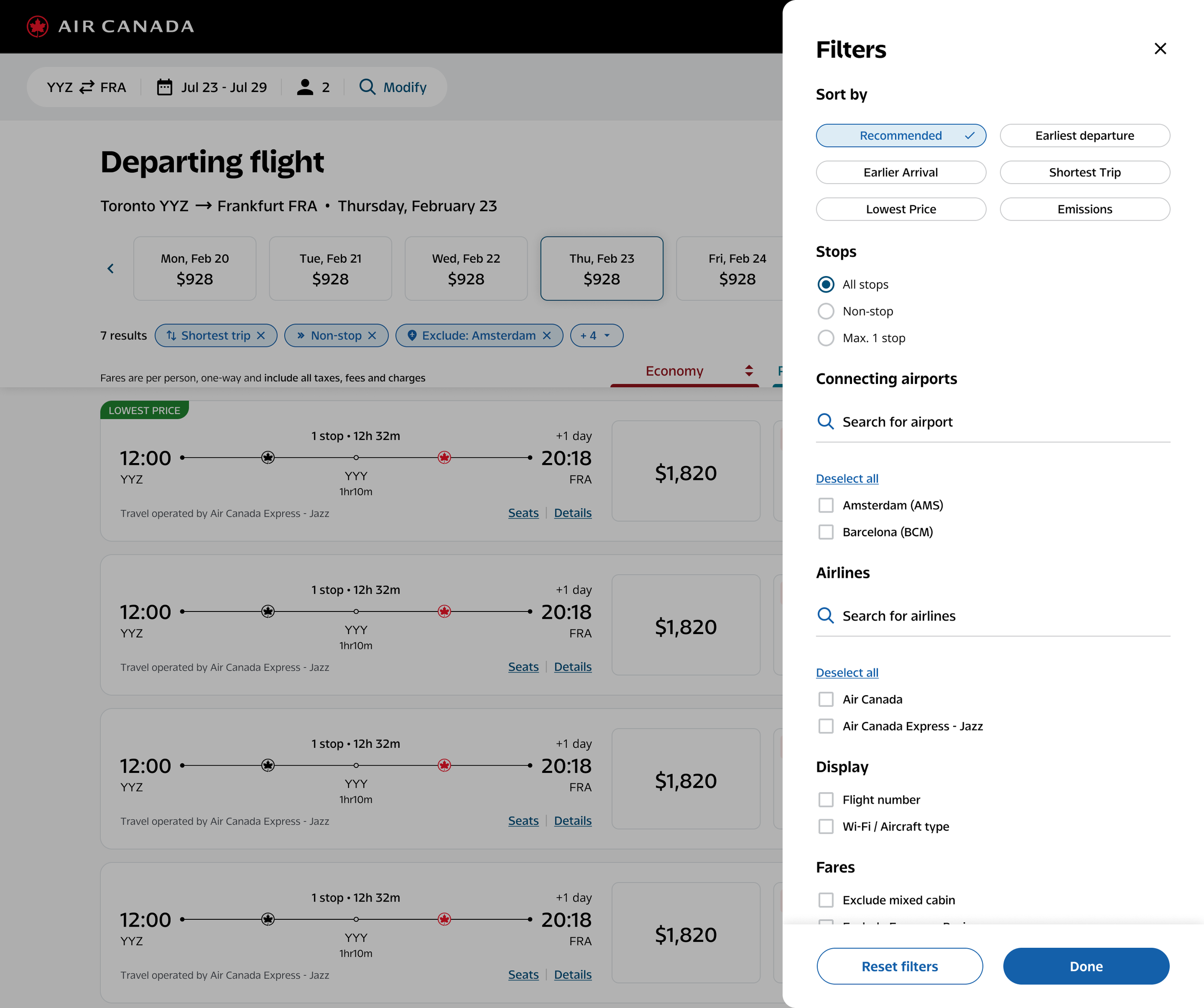
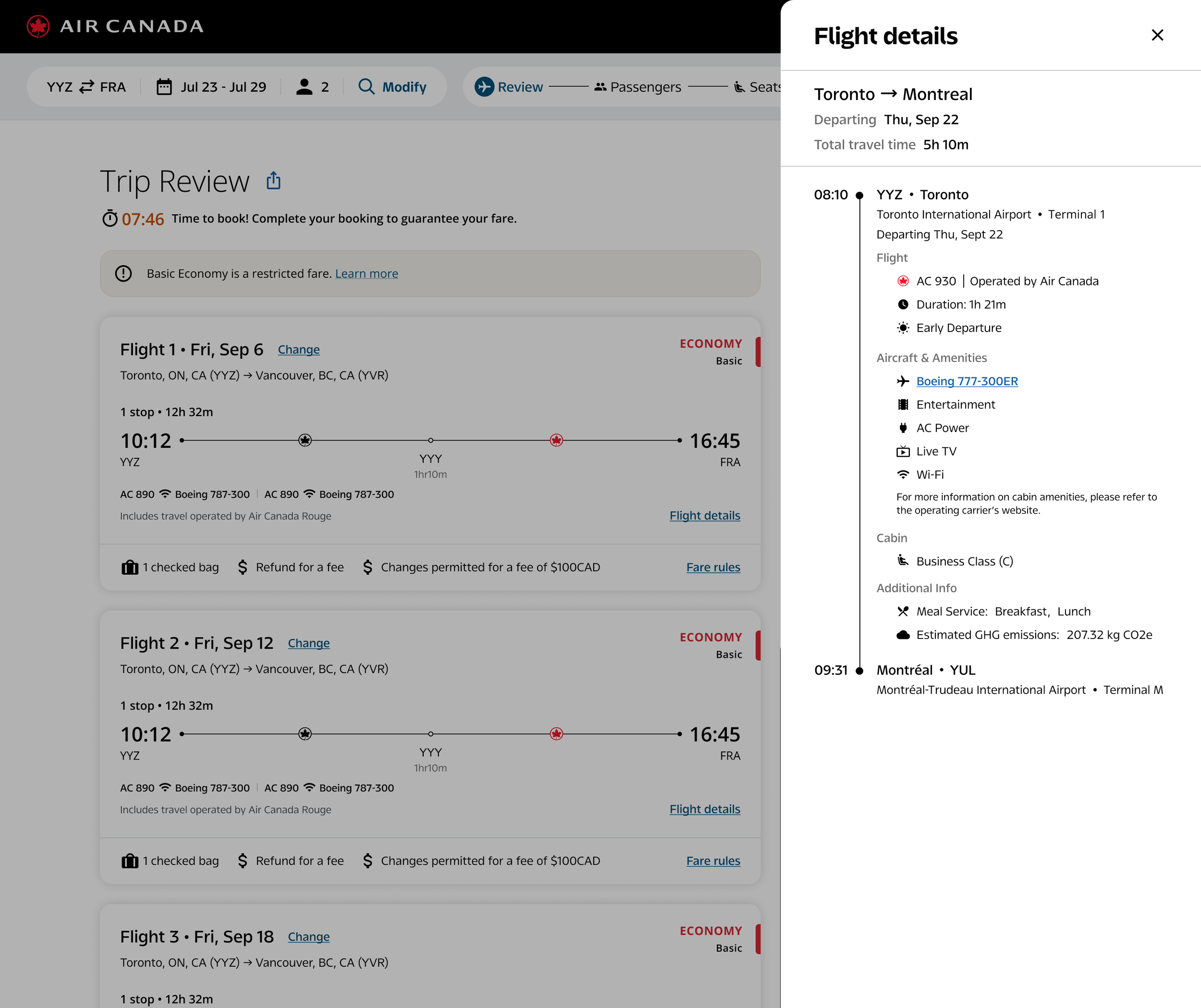
The drawer family became a reusable pattern the team could carry across Book, Shop, and Manage, reducing one-off design decisions and bringing more consistency to the experience from search through to payment.
Coaching 12 designers meant building a shared language for growth.
One of my primary mandates on this engagement was to elevate the design team's capabilities in a structured, sustainable way. I established a bi-weekly coaching cadence with 12 designers, with each session tailored to the individual's goals and current project challenges. Coaching covered UX fundamentals, stakeholder communication, design critique, and strategy — creating a consistent feedback loop that compounded over time.
The challenge with coaching at this scale is making progress visible. Without structure, sessions become reactive check-ins. To address this, I developed a Goal Transformation framework: a workshop activity I ran with each designer to ground their three annual goals in concrete design skills, define what success looked like, and map out the effort required to get there. We then used our sessions throughout the year to track progress, unblock challenges, and adjust direction as the work evolved.
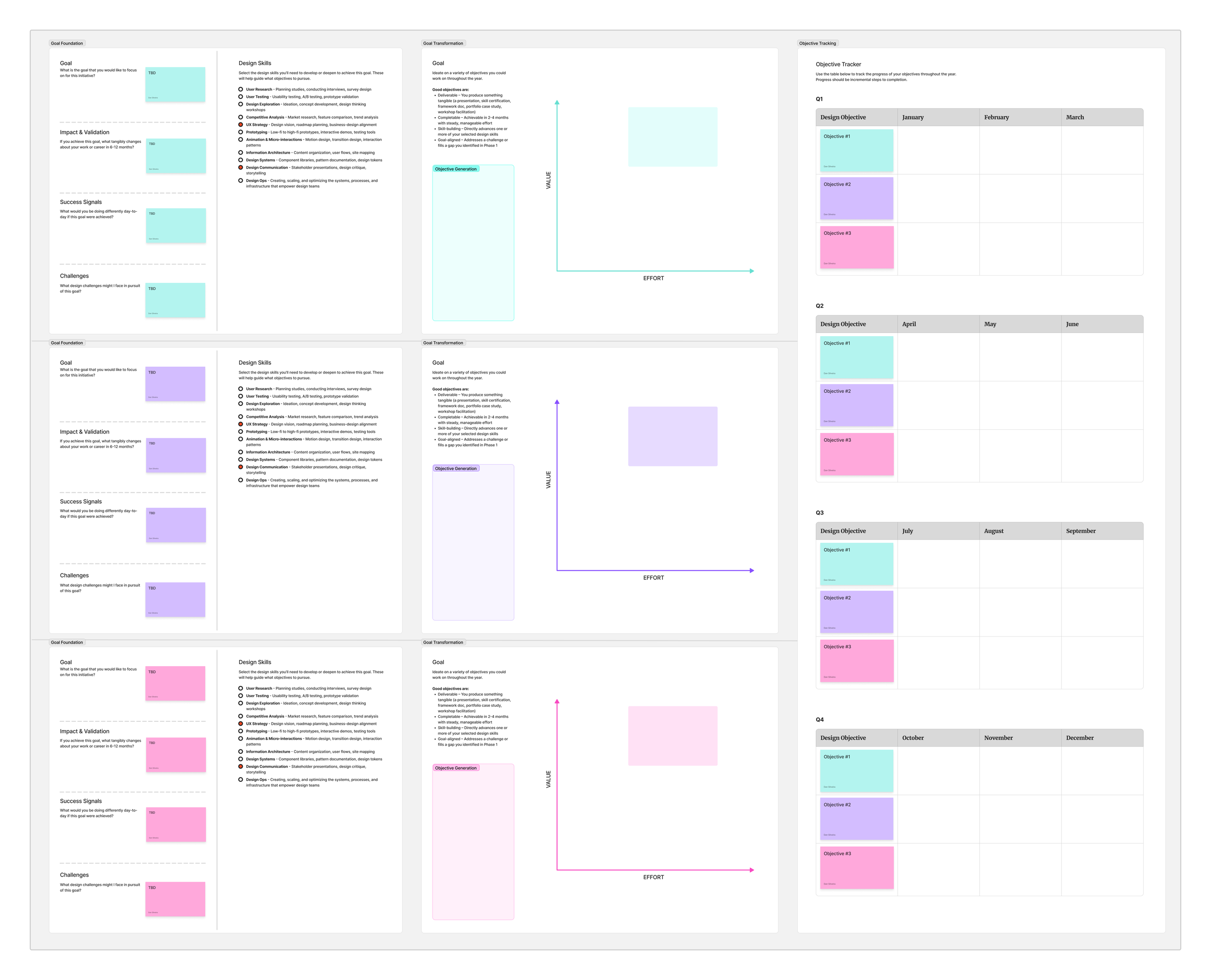
Designers came to sessions with a shared point of reference instead of starting from scratch each time. The framework gave them ownership over their own development rather than a queue of feedback to respond to.
Building the infrastructure a scaling design team actually needs.
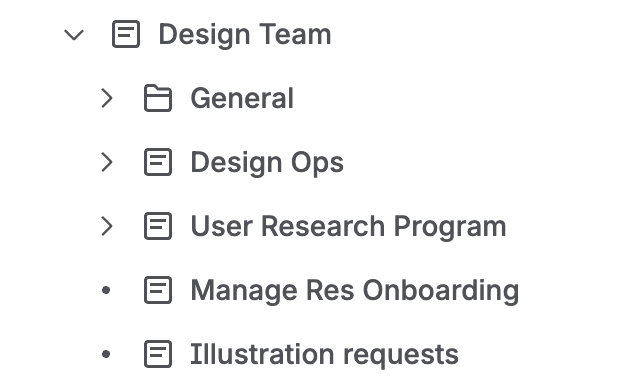
Beyond individual coaching, the Air Canada design team needed operational infrastructure to work effectively at scale. I ran a design practice maturity assessment to establish a baseline — evaluating the team across research, systems thinking, process standardization, and cross-functional collaboration. The findings shaped a prioritized roadmap of DesignOps investments: a centralized research repository, a design request intake workflow, and a Confluence-based knowledge hub to reduce silos and create a shared source of truth.
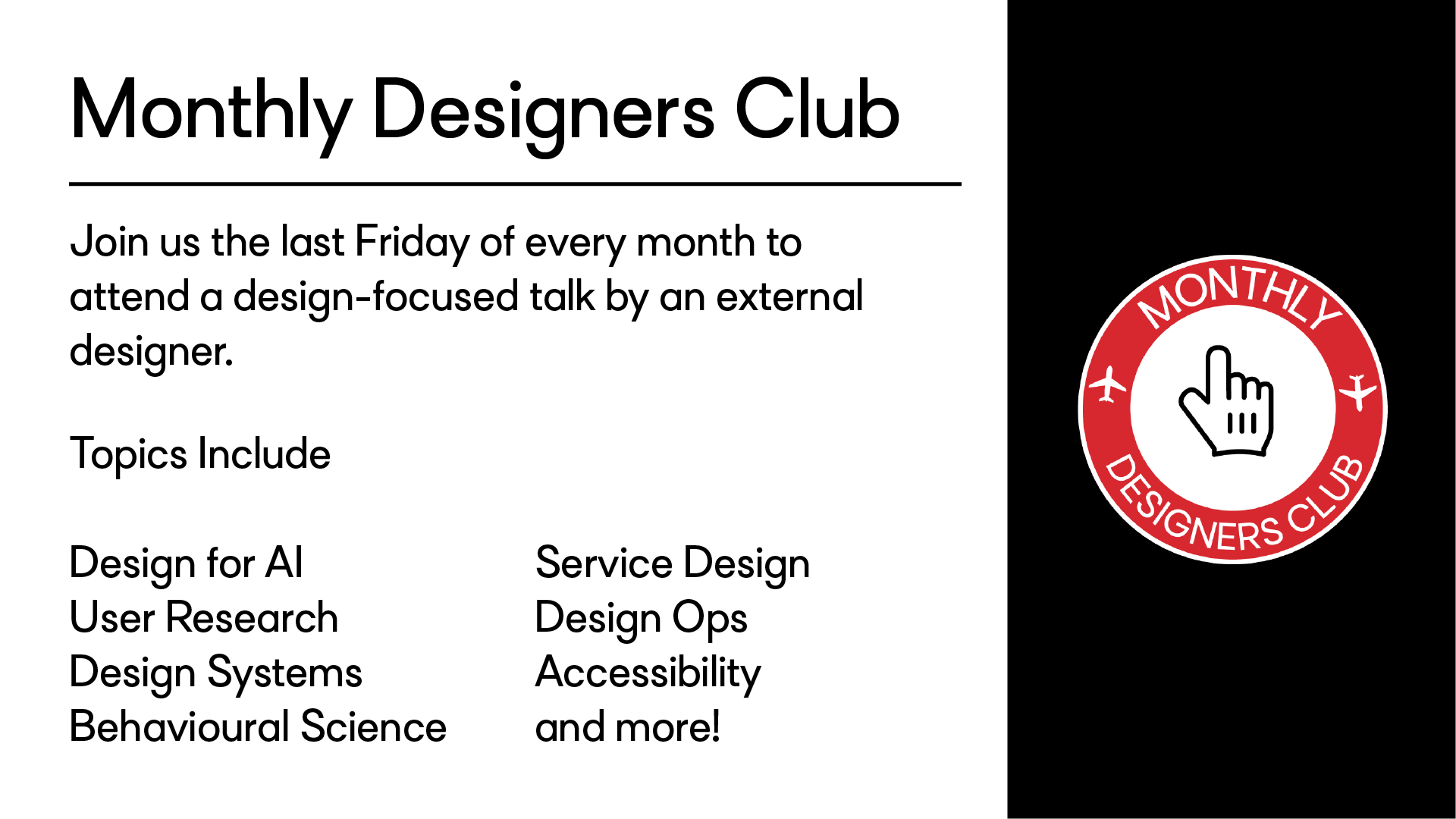
Alongside the operational work, I started the Monthly Designers Club, a program that brought in external design professionals each month to give a focused talk on a different area of the craft. Topics ranged from design strategy and AI tooling to user research and accessibility. I also planned and ran skill development workshops throughout the year targeting the gaps the maturity assessment had identified. The Designers Club gave the team a regular connection to the broader design community and a visible signal that their growth was being taken seriously.
Impact
On the product side, Compass was implemented across Book, Shop, and Manage, replacing a fragmented component landscape with a more consistent, system-aligned experience. The drawer component family resolved a structural UX problem that had affected users across breakpoints, and the redesigned booking flow brought clarity to a journey used by millions of travellers each year.
On the practice side, designers who came in with strong execution skills left with sharper strategic instincts and a clearer sense of their own growth. The DesignOps infrastructure gave the team tools and habits that kept working after the engagement ended.
The client recognized both as meaningful outcomes. The speed and quality of design delivery stood out, and the investment in team capability was seen as something that would carry the practice forward long after the project closed.